Many small businesses provide excellent products or services but remain nearly invisible to nearby customers when they search online. Since many local searches happen when people are ready to contact a business or make a purchase, appearing prominently in local search results can directly influence revenue.
According to Google, a significant percentage of searches have local intent, making Local SEO one of the most cost-effective marketing strategies for businesses serving a specific geographic area. Unlike traditional SEO, where national brands often dominate competitive keywords, local search rewards businesses that demonstrate relevance, proximity, and trust.
This guide explains the Local SEO strategies that consistently produce results, from optimizing your Google Business Profile and managing reviews to building citations, earning local backlinks, and creating location-focused content.
Before making any changes, search Google for your primary service together with your city or service area. Record where your website and Google Business Profile currently appear. This benchmark will help you measure progress over time.
Why Local SEO Works for Small Businesses
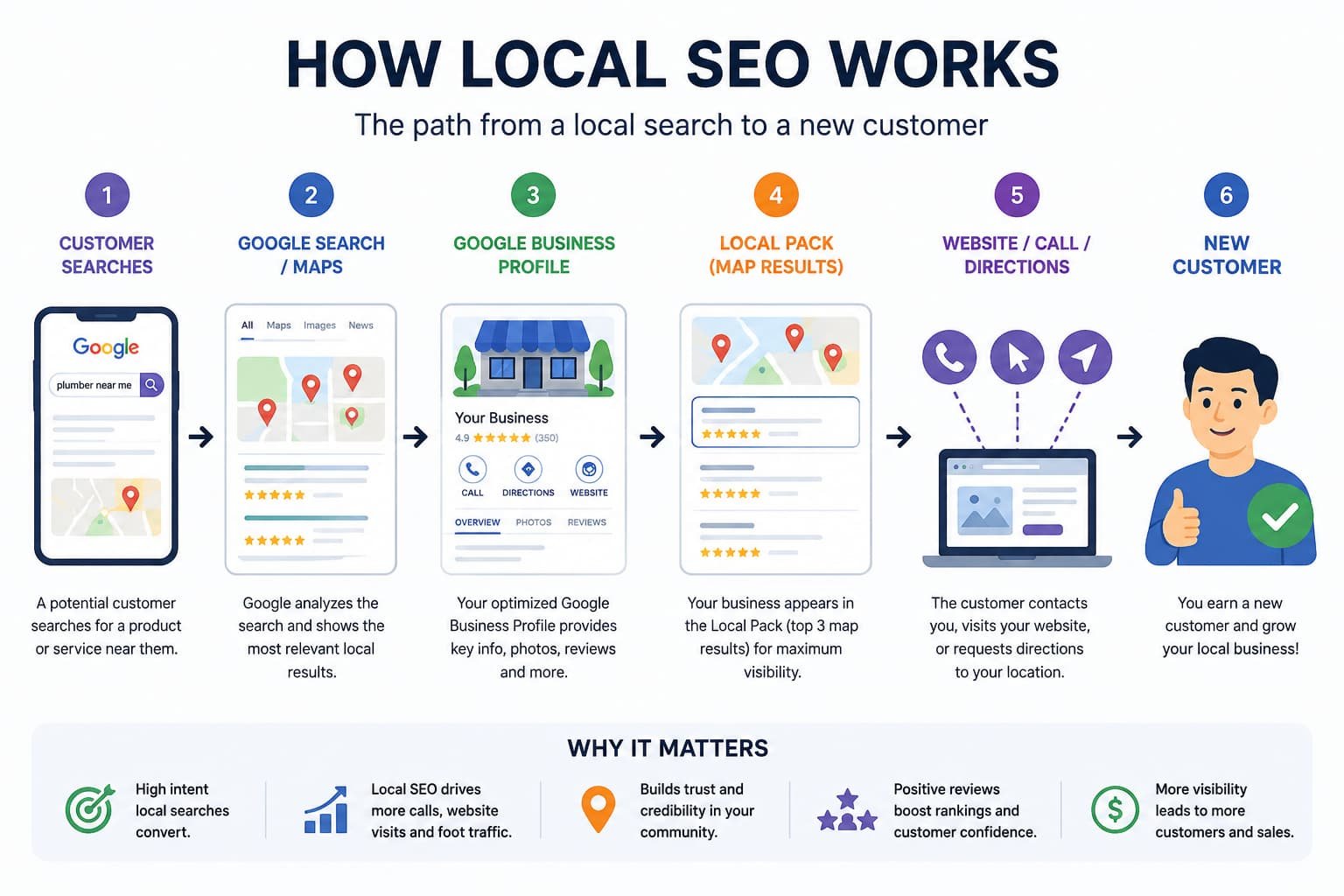
Local search traffic often converts at a much higher rate than general informational traffic because users typically search when they are ready to contact a business, request a quote, or visit a physical location. For many small businesses, improving local visibility can generate qualified leads without continually increasing advertising spend.
Unlike paid advertising, Local SEO delivers long-term value. A well-optimized Google Business Profile, accurate business information, positive reviews, and useful local content can continue attracting customers long after the initial optimization work is complete.
Google evaluates local rankings primarily using three factors: relevance, distance (proximity), and prominence. While businesses cannot control proximity to every searcher, they can significantly improve relevance and prominence by providing complete business information, strong reviews, consistent citations, high-quality content, and trusted backlinks.
Google Business Profile: Do This First
For most local businesses, Google Business Profile (GBP) is the single most important Local SEO asset. It influences visibility in Google Maps, the Local Pack, branded searches, and many location-based search queries.
Setup and Verification
Claim your profile through Google Business Profile and complete Google’s verification process. Depending on your business type and location, verification may be completed by video, phone, email, or postcard. Google periodically updates its verification methods, so follow the instructions provided inside your account.
If another user has already claimed your business listing, begin Google’s ownership request or reinstatement process as soon as possible. Delays in regaining access can affect your ability to manage business information, reviews, and customer interactions.
Critical Optimizations
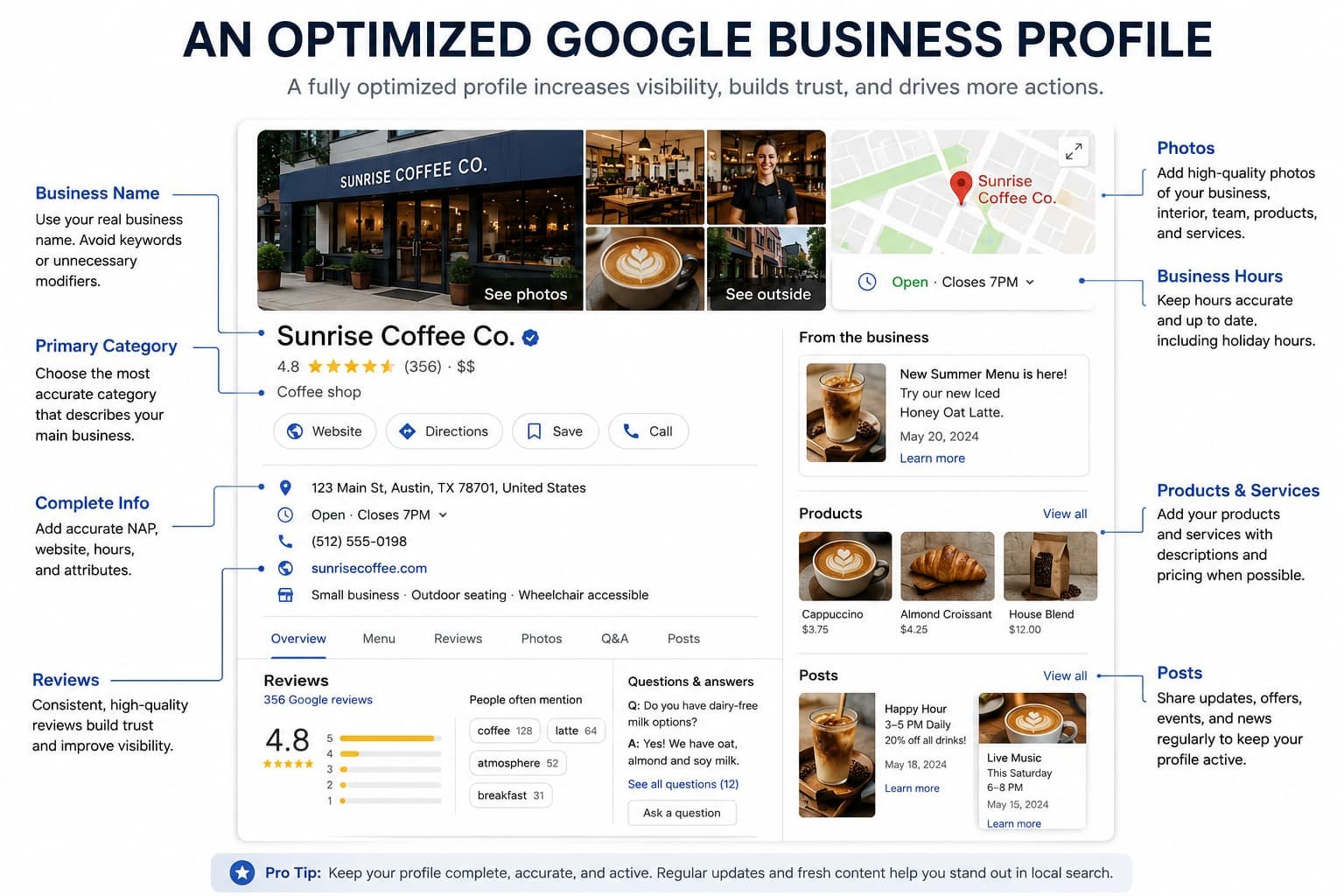
Business Name: Always use your real-world business name exactly as customers recognize it. Avoid adding keywords or location modifiers that are not part of your official business name, as this may violate Google’s guidelines.
- Primary Category: Your primary business category is one of the strongest relevance signals within Google Business Profile. Select the most accurate primary category available, then use secondary categories only where they genuinely reflect your services.
- Description: Write a clear, customer-focused business description that naturally includes your primary services and location without excessive keyword repetition.
- Photos: Regularly upload high-quality, original photos of your business exterior, interior, staff, products, completed projects, or services. Fresh visual content helps customers recognize your business and often improves engagement on your profile.
- Products and Services: Complete your Products or Services section with detailed descriptions, pricing where appropriate, and accurate service categories. This provides Google with additional context about your business offerings.
- Business Attributes: Select all applicable attributes, such as wheelchair accessibility, online appointments, outdoor seating, veteran-owned, or women-owned. These attributes help Google match your business to relevant searches and filters.
- Questions & Answers: Monitor your Q&A section regularly and proactively answer common customer questions to ensure visitors receive accurate information.
- Google Posts: Publish regular updates featuring company news, seasonal promotions, new services, events, or special offers. Consistent posting keeps your profile active and provides customers with fresh information.
Example: Google Business Profile Optimization
A local HVAC company invested one month in fully optimizing its Google Business Profile by completing every available section, expanding its services catalog, uploading professional photos, and updating business attributes.
- Completed every section of the profile.
- Added comprehensive service descriptions and pricing where appropriate.
- Uploaded a large library of recent, high-quality business photos.
- Added relevant business attributes, including emergency service availability.
Within the following months, the business experienced significantly higher profile engagement, increased customer calls, and improved visibility in local search results. While results vary depending on market competition and overall SEO performance, a fully optimized Google Business Profile often delivers one of the fastest returns on investment for local businesses.
Financial investment: minimal. Time investment: approximately 10-12 hours for a complete optimization.
Local Citations and NAP Consistency
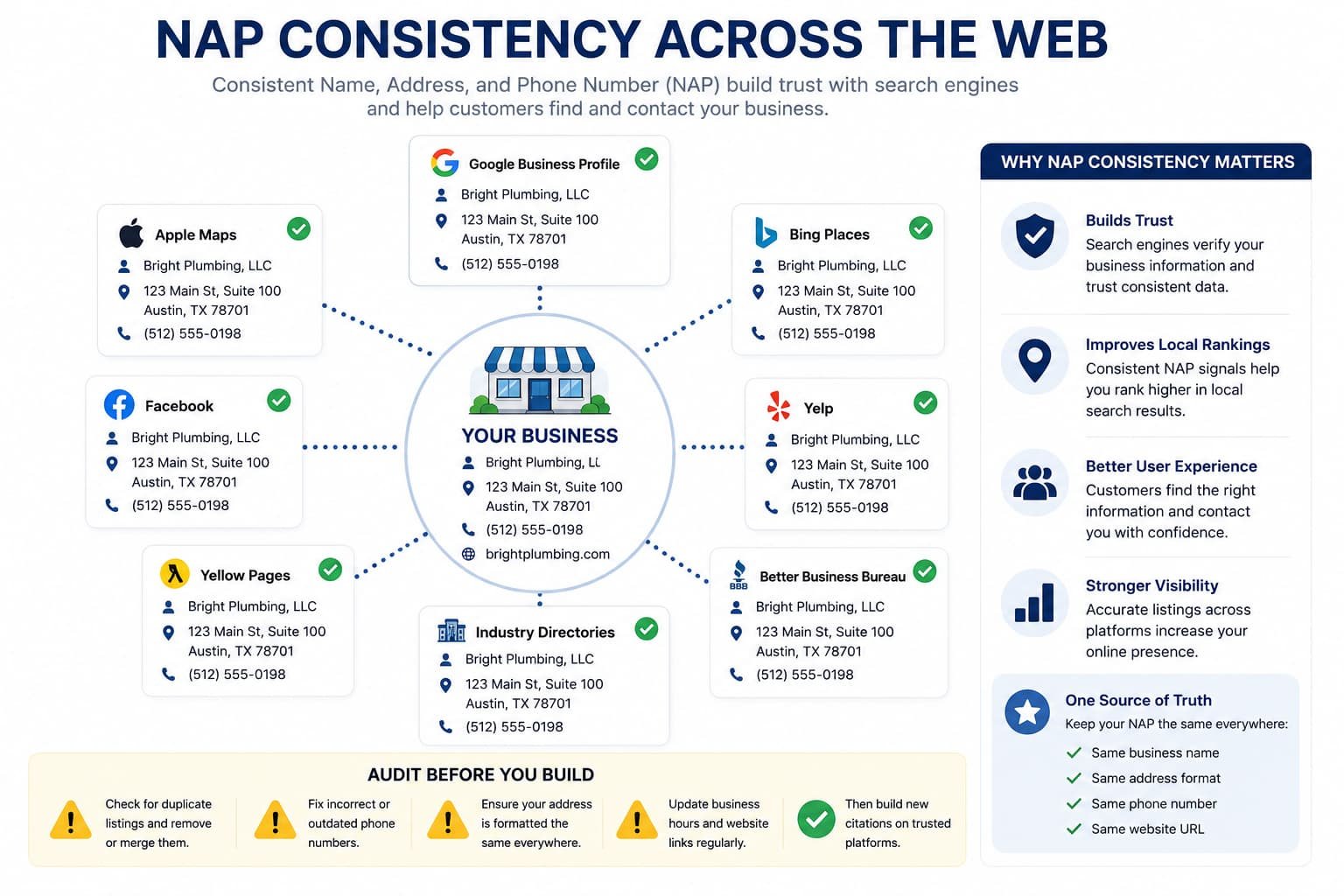
A local citation is any online mention of your business’s Name, Address, and Phone Number (NAP). Citations do not always include a backlink, but they help search engines verify that your business exists and that its information is consistent across the web. Accurate citations also make it easier for potential customers to contact or visit your business.
Building Citations Strategically
- Tier 1 – Data Providers: Services such as Data Axle, Neustar Localeze, and Foursquare distribute business information to numerous other directories and mapping platforms. Keeping these records accurate helps maintain consistency across the wider ecosystem.
- Tier 2 – Major Platforms: Google Business Profile, Apple Maps, Bing Places, Yelp, Facebook, Better Business Bureau, and industry-relevant directories provide strong visibility and often appear directly in search results.
- Tier 3 – Local and Industry Directories: Chambers of commerce, local business associations, trade organizations, tourism websites, and reputable regional directories strengthen your local presence and industry relevance.
Audit Before You Build
Before creating new citations, audit your existing business listings. Platforms such as BrightLocal or Whitespark can help identify duplicate listings, outdated information, and inconsistent business details.
Pay particular attention to:
- Different versions of your business name.
- Old phone numbers that are still published online.
- Different address formats or missing suite numbers.
- Outdated business hours or website URLs.
Correct existing inconsistencies before adding new listings. Consistent business information strengthens trust for both users and search engines while reducing confusion across different platforms.
Once your core business information is standardized, expand your presence gradually by prioritizing authoritative directories first, followed by niche and local websites that are genuinely relevant to your business.
Online Reviews: Building Trust and Local Visibility
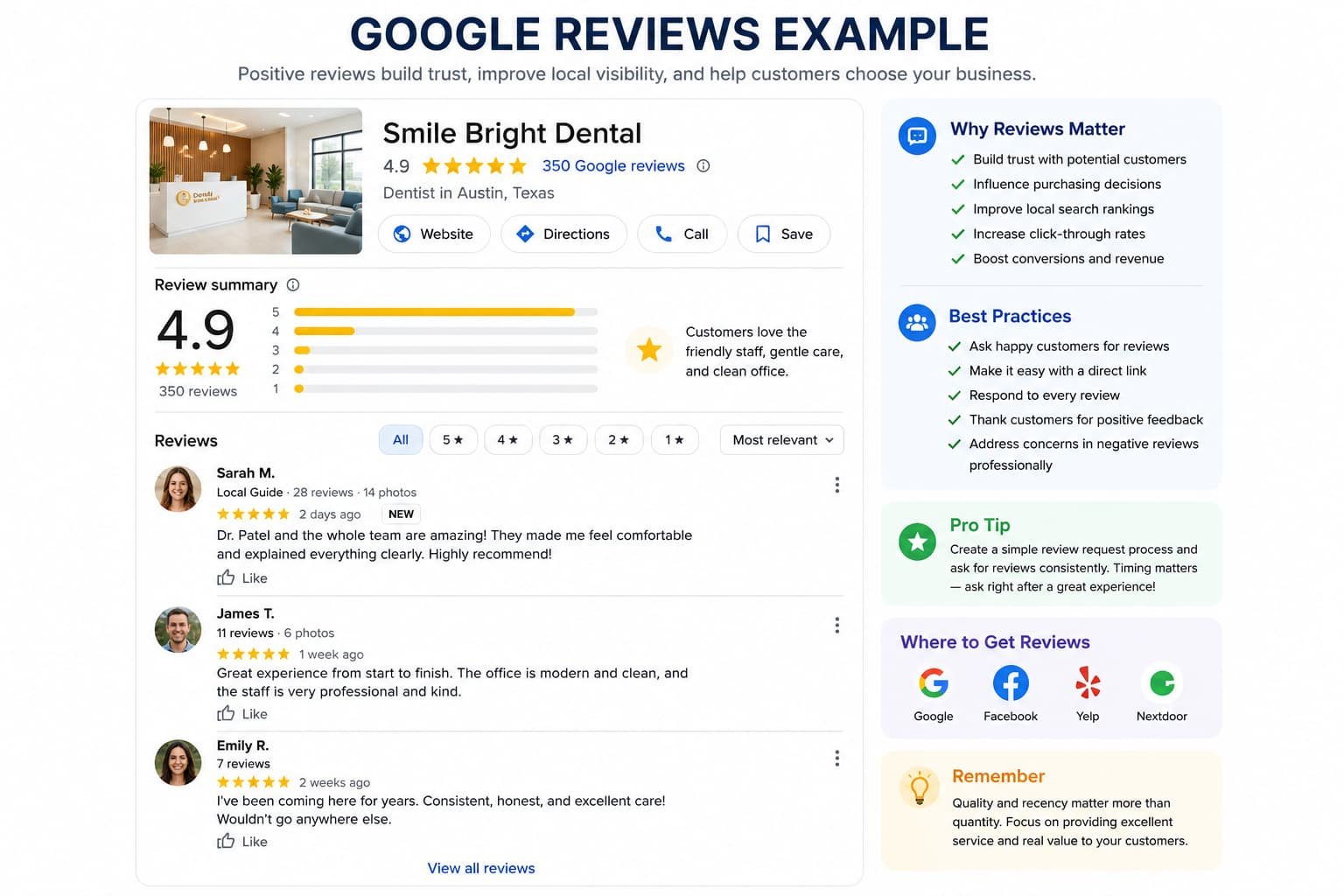
Customer reviews influence purchasing decisions and play an important role in Local SEO. Google considers review quality, quantity, recency, and overall reputation when evaluating local businesses. Although reviews are only one of many ranking signals, businesses with a consistent flow of authentic reviews often enjoy stronger local visibility and higher customer trust.
Create a Consistent Review Process
The most successful businesses do not collect reviews occasionally-they make review requests part of their normal customer experience. Ask satisfied customers shortly after completing a service or delivering a product, while the experience is still fresh in their minds.
Effective review request channels include:
- SMS messages containing your direct Google review link.
- Follow-up emails with a simple call to action.
- QR codes displayed on invoices, receipts, or business cards.
- Friendly in-person requests from your team after completing a job.
- Google’s built-in review link, which minimizes friction during the review process.
Avoid offering discounts, gifts, or incentives in exchange for reviews, as this violates Google’s review policies and may result in reviews being removed or account issues.
Respond to Every Review
Responding to customer reviews demonstrates that your business values customer feedback and actively engages with its audience. While responses alone are not guaranteed to improve rankings, they contribute to stronger customer trust and a better overall business reputation.
When responding to negative reviews:
- Acknowledge the customer’s experience respectfully.
- Apologize where appropriate without becoming defensive.
- Offer to continue the conversation privately by phone or email.
- Remain professional and concise.
Remember that your response is not only for the original reviewer. Future customers often evaluate how businesses handle criticism before deciding whom to trust.
While Google reviews typically have the greatest impact on local visibility, maintaining strong ratings across industry-specific platforms such as Houzz, Healthgrades, Avvo, TripAdvisor, or Facebook also helps strengthen your overall online reputation.
Example: Growing Reviews Consistently
A local dental practice implemented a standardized review request process by sending SMS messages shortly after each appointment and responding to every new review within one business day.
- Review requests were sent automatically after appointments.
- Every review received a personalized response.
- Review volume increased steadily over several months.
- Improved review activity coincided with stronger visibility in the Local Pack and increased customer inquiries.
Although every market is different, businesses that consistently generate genuine customer feedback often experience stronger long-term Local SEO performance than those relying on occasional review campaigns.
Local Links and Authority Signals
Backlinks remain an important ranking factor for both traditional and local SEO. However, for local businesses, relevance often matters more than sheer quantity. A link from a respected local organization or industry association can carry significantly more value than dozens of low-quality directory listings.
High-Value Local Link Opportunities
- Local Chambers of Commerce: Membership listings often provide trusted local citations and valuable backlinks.
- Community Sponsorships: Supporting local charities, schools, sports clubs, or community events frequently results in natural local mentions and backlinks.
- Local News Coverage: Newspapers, magazines, and regional publications remain some of the strongest local authority signals available.
- Business Partnerships: Build relationships with complementary local businesses that naturally reference each other’s services where appropriate.
- Helpful Local Resources: Publish genuinely useful content such as local guides, neighborhood resources, checklists, or event calendars that other websites naturally reference.
Digital PR platforms and journalist request services can also help businesses earn authoritative editorial mentions by providing expert commentary or industry insights. Focus on earning relevant, high-quality links rather than pursuing backlinks purely for SEO metrics.
Local Content That Supports Long-Term Growth
Publishing locally relevant content helps businesses reach customers at different stages of the buying journey while reinforcing topical authority within their service area. Well-planned local content can generate organic traffic, earn backlinks, and strengthen your overall Local SEO strategy.
Location Pages for Multi-Location Businesses
If your business serves multiple cities or operates from several physical locations, create a dedicated landing page for each location. Avoid publishing near-identical pages that only replace the city name, as this provides little value to users and may limit organic performance.
Each location page should include:
- Unique, location-specific content.
- Photos of the local office, staff, or completed projects.
- Testimonials from customers in that area.
- Frequently asked questions relevant to the local audience.
- An embedded Google Map where appropriate.
- References to neighborhoods, landmarks, or local communities that demonstrate genuine local presence.
Become the Local Expert
Your blog should answer questions that local customers actually ask. Instead of publishing generic articles that thousands of websites already cover, focus on topics connected to your region, industry, and customer needs.
Examples include seasonal advice, local regulations, neighborhood guides, regional events, or frequently asked service questions. This type of content naturally supports your service pages through internal linking while strengthening your topical authority.
Common Local SEO Mistakes
Mistake 1: Inconsistent Business Information
- Before: Different versions of the business name, outdated phone numbers, inconsistent addresses, and duplicate directory listings.
- Result: Lower trust signals and inconsistent business information across search platforms.
- After: Standardized NAP information across all major directories and business listings.
- Outcome: Improved business consistency, better customer experience, and stronger local search visibility over time.
Mistake 2: Collecting Reviews Only Occasionally
- Before: Reviews arrive in occasional bursts, followed by long periods without any customer feedback.
- Result: Competitors with a consistent flow of authentic reviews appear more active and trustworthy.
- After: Review requests become part of the normal customer journey.
- Outcome: Steady review growth strengthens customer trust and supports long-term Local SEO efforts.
Mistake 3: Thin Location Pages
- Before: Nearly identical location pages with only the city name changed.
- Result: Low-value content that provides little unique information for either users or search engines.
- After: Each location page contains unique local content, customer stories, FAQs, team information, and community references.
- Outcome: Stronger relevance for local searches and improved engagement from visitors.
Your 30-60-90 Day Local SEO Plan
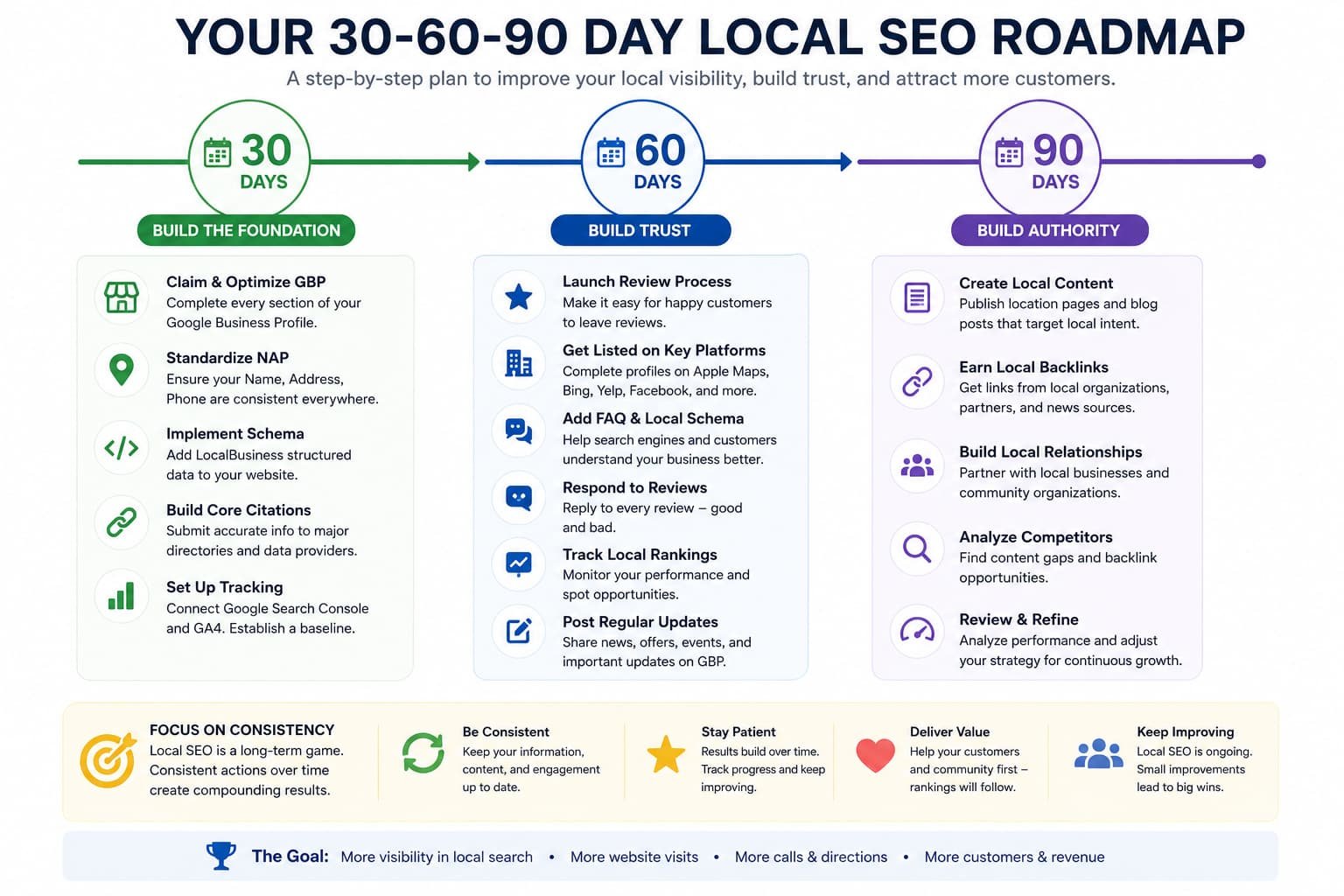
Days 1-30: Build the Foundation
- Audit and standardize your NAP information.
- Claim and fully optimize your Google Business Profile.
- Implement LocalBusiness structured data.
- Submit accurate business information to major citation platforms.
- Configure Google Search Console and Google Analytics 4.
Days 31-60: Build Trust
- Launch a repeatable customer review process.
- Complete profiles on Apple Maps, Bing Places, Yelp, Facebook, and relevant industry directories.
- Add FAQ and LocalBusiness schema where appropriate.
- Respond to every new customer review.
- Begin monitoring local rankings using tools such as BrightLocal or Local Falcon.
- Publish regular Google Business Profile updates.
Days 61-90: Build Authority
- Publish location-focused blog articles or city landing pages.
- Develop relationships with local organizations and community partners.
- Perform competitor analysis to identify content and backlink opportunities.
- Pursue relevant local backlink opportunities.
- Review Google Business Profile performance and refine your strategy based on customer behavior.
Frequently Asked Questions
How long does Local SEO take to produce results?
Many businesses see improvements in Google Business Profile engagement within the first few months, while broader Local SEO results often take 3 to 6 months or longer to develop, depending on competition, website quality, and ongoing optimization efforts.
Do I need a physical storefront?
No. Service-area businesses can verify a legitimate physical address with Google and choose to hide it from public view. However, virtual offices, mailbox services, and other locations that do not represent a genuine business presence generally do not meet Google’s eligibility guidelines.
Can I manage Local SEO without hiring an agency?
Yes. Many core Local SEO activities-including Google Business Profile optimization, citation management, review generation, and content creation-can be handled in-house. As your business grows, professional assistance may help accelerate the adoption of more advanced strategies.
How many reviews do I need?
There is no universal target. Instead of chasing a specific number, focus on generating authentic reviews consistently while maintaining high customer satisfaction. Compare your review profile with leading competitors in your local market to understand the level of competition.
Does social media improve Local SEO?
Social media is not a direct Google ranking factor. However, active social profiles can increase brand awareness, generate website traffic, encourage customer engagement, and support your overall digital marketing strategy, all of which may indirectly benefit Local SEO.
Should I use LocalBusiness Schema Markup?
Yes. LocalBusiness structured data helps search engines better understand important business information such as your name, address, phone number, opening hours, services, and geographic location. While structured data alone will not improve rankings, it supports search engines in interpreting your content more accurately.
Conclusion
Successful Local SEO is built on consistency rather than shortcuts. Businesses that maintain accurate information, optimize their Google Business Profile, earn genuine customer reviews, publish valuable local content, and build trusted community relationships create a strong foundation for sustainable local visibility.
Instead of chasing every new ranking tactic, focus on continuously improving the experience you provide to both customers and search engines. Over time, these consistent efforts help build authority, trust, and long-term growth in your local market.
Sources and Research
- Google Trends – Near Me Searches Growth Report
- BrightLocal – Local Consumer Review Survey
- Google Business Profile – Official Help Center
- Whitespark – Local Citation Building Guide
- Schema.org – LocalBusiness Specification
- Moz – Local Search Ranking Factors
- Google Search Central – Structured Data for Local Business
- Semrush – Local SEO Study
- BrightLocal – GBP Photo Impact Case Study
- Local Falcon – Grid Rank Tracking Methodology
- Ahrefs – Local SEO Backlink Research